

On Chinese New Year 2020, my dad took me to Chinatown in NYC for some breakfast. New York City has great eats, and Chinatown is home to a ton of great restaurants you can visit if you’re craving authentic Chinese food! (Not Panda Express, mind you, but the real stuff.) On this particular morning, we visited Green Garden Village for something piping hot on that cold January morning.

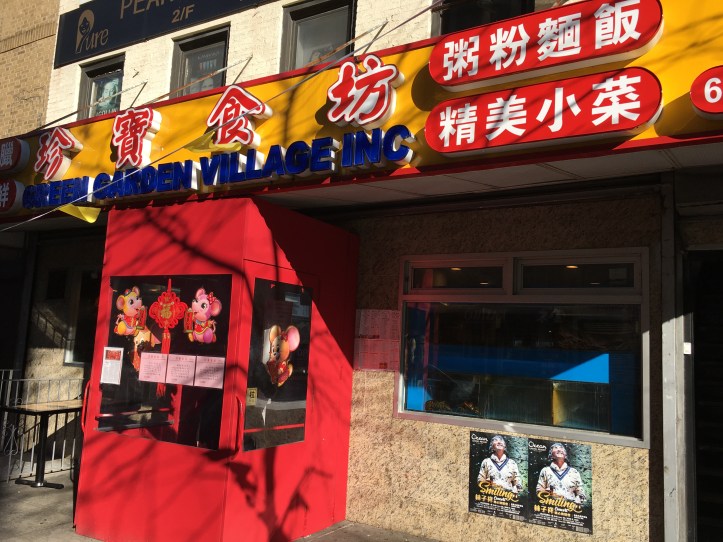
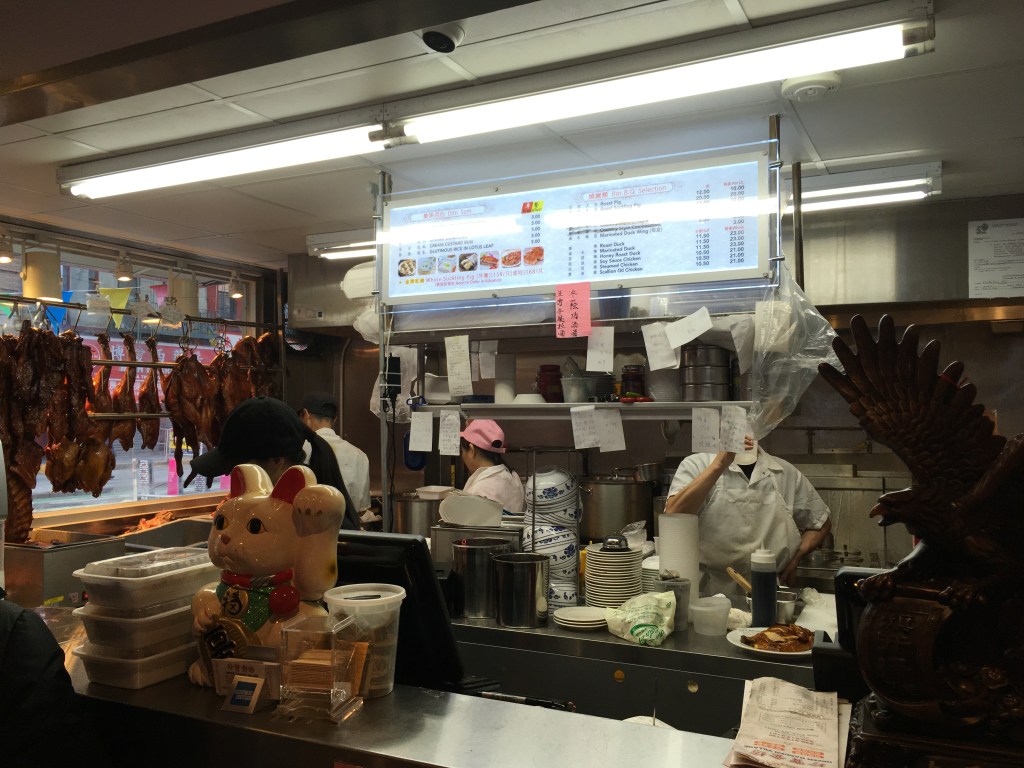
The restaurant was quite small, and the food was prepared in a small kitchen right in the front. There were very few people in the restaurant this early in the morning, so we sat down to start the day with a few traditional dishes.

We ordered congee (粥, zhōu), which is a sort of Chinese rice porridge. However, congee can vary greatly from region to region. For instance, Taiwanese porridge tends to be less flavorful, and is prepared simply by cooking rice with a higher ratio of water, while Guangdong porridge is directly cooked with ingredients like herbs and meat to infuse the mixture with various flavors.
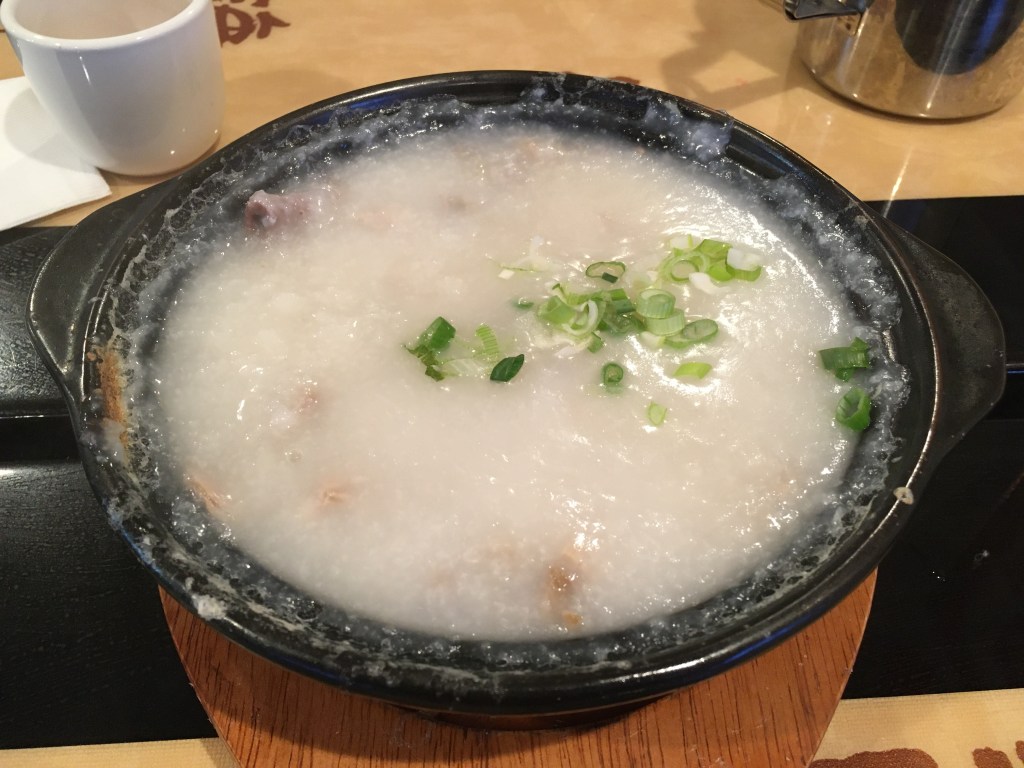
My father decided on pork kidney and liver congee. These particular parts of the animal are usually less fibrous than the meat near the surface of its skin, like shoulder or flank, and have a consistency that I would describe as very firm tofu. Their flavor is also much richer, and, like the century egg, taste almost bitter. For my fellow meat-eaters unfamiliar with Chinese cooking, these east Asian dishes often incorporate parts of animals that Americans would never dream of eating, like ox tongue, chicken feet, and pig intestines. Although they may sound unappetizing, remember that seasoning and cooking method affects all aspects of taste and texture of any dish- don’t let your unfamiliarity with the cut of meat discourage you from trying it!
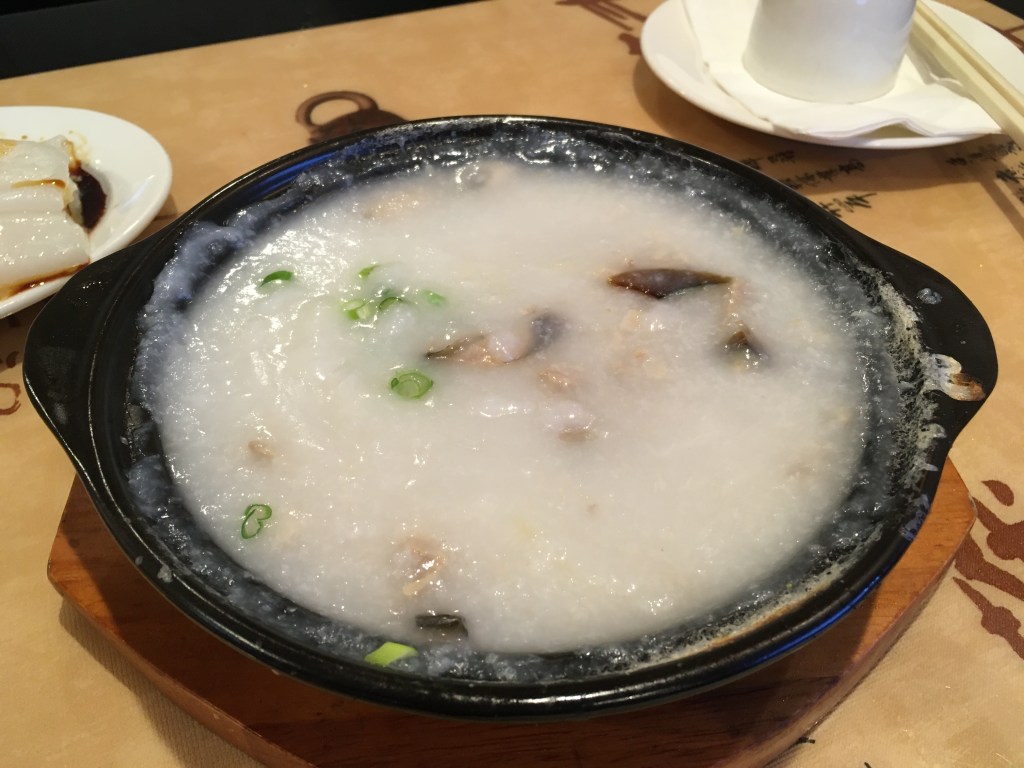
I decided on my go-to congee, pork with preserved egg (皮蛋, pídàn). Preserved eggs, better known as century eggs, are duck eggs that have been prepared in such a way that their pH is lowered. The traditional recipe calls for the eggs to be covered in alkaline mud, which has a pH of over 7, making it acidic. The egg changes in flavor and consistency- the whites become a dark brown-black, translucent color, and take on a Jell-O like consistency. The yolk thickens and turns green-black, and the flavor becomes much richer. In pork and preserved egg congee, the meat and eggs are cut up and blended into the congee, and create an amazing medley of flavors and textures that come together to make a delicious dish. The saltiness of the pork, richness of egg, and smoothness of the congee all combine into a well-balanced bowl!
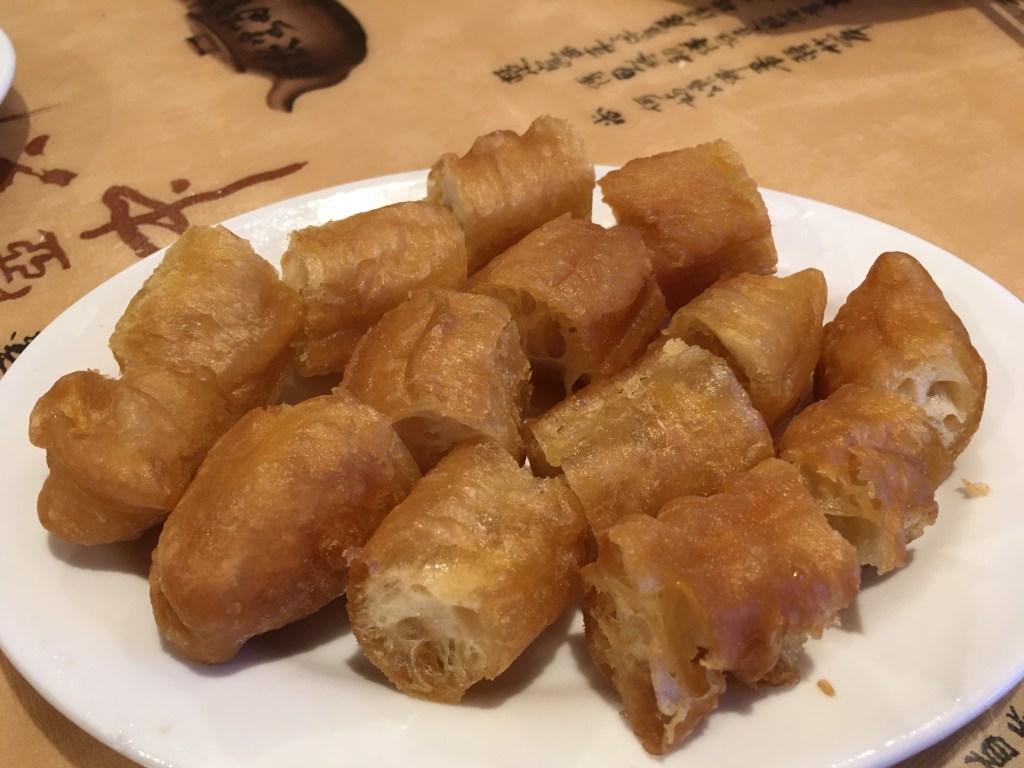
A staple side dish for congee are fried dough sticks (油條, yóutiáo), kind of like a Chinese version of Italian breadsticks. They are thick, chewy, fried sticks of dough filled with air pockets, and go very well with the liquid consistency of congee (like how crackers go well with soup).
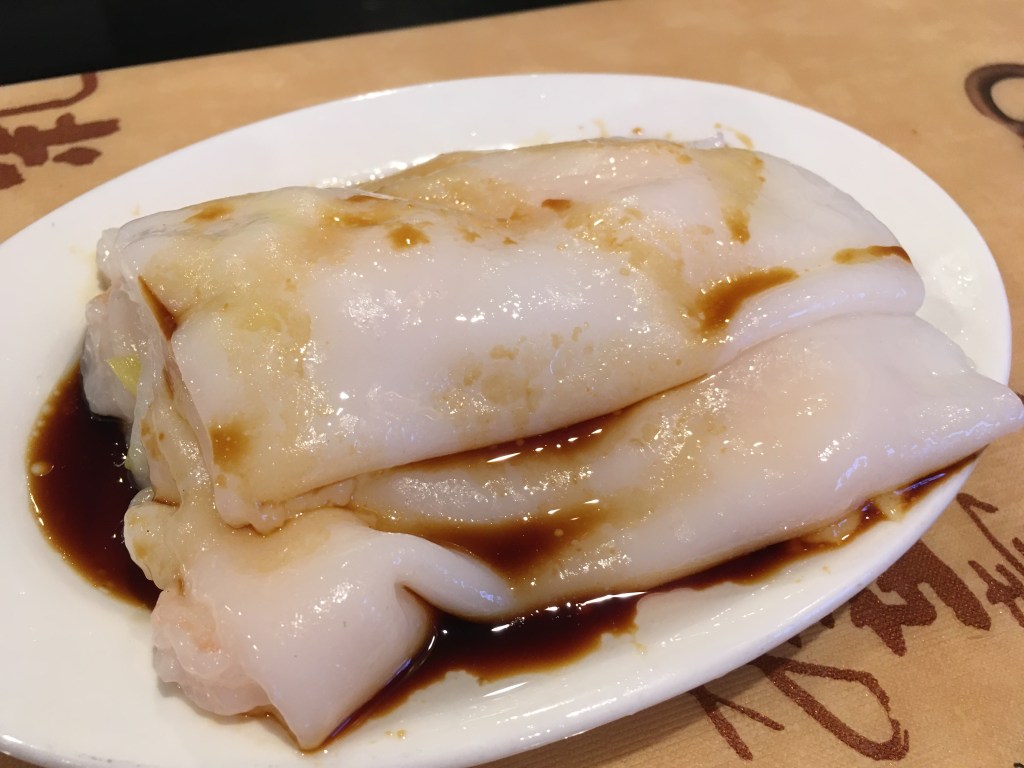
Finally, we had shrimp rice noodle rolls (蝦腸粉, xiā cháng fěn), which consists of shrimp wrapped in a soft noodle wrapper. The wrapper is very chewy, smooth, soft, and rather insipid in taste, which is why soy sauce is the most common condiment for this dish.
All of the dishes we ordered were delicious, which goes to show that you shouldn’t judge a restaurant based on its premises or appearance! Who would’ve thought that this little hole-in-the-wall restaurant on a Chinatown street could serve food so aromatic?
Thanks for reading my post! If you enjoyed it, please like, reblog, and share!
 thetravellinggashapon